Bundle Stacking Tips to Get More Streaming for Less
Learn bundle stacking strategies to combine streaming deals and save big. Carrier perks, promotions, and discount layering explained.
Anúncios
Bundle stacking means combining multiple offers, carrier perks, and promotional deals to access as many streaming services as possible for the lowest total cost. Done right, it can cut your bill by 50 percent or more.

What Exactly Is Bundle Stacking?
Anúncios
Bundle stacking layers different discount sources together. You might get Netflix free through your carrier, Disney+ through a paid bundle, and Peacock through a credit card perk. Each layer reduces out-of-pocket spending.
The strategy requires mapping all available discounts first and then subscribing in the right order. Activating a paid subscription before checking carrier perks can mean paying for something you could get free.
How to Map Your Available Streaming Perks
Anúncios
Start by logging into your wireless carrier account and checking the perks or add-ons section. T-Mobile, Verizon, and AT&T all include streaming services on select plans that many customers never activate.
Next, review your credit card benefits portal. Cards from Chase, American Express, and Capital One frequently offer statement credits or complimentary access to streaming platforms as cardholder perks.
Which Carrier Plans Include Free Streaming?
- T-Mobile Go5G Plus — Netflix Standard with ads, Apple TV+, Hulu with ads
- T-Mobile Go5G Next — Netflix Standard, Apple TV+, Hulu with ads
- Verizon myPlan — Choose perks including Disney+, Max, Apple Music, or Walmart+
- AT&T Unlimited Premium — Apple TV+ included
- Xfinity Internet — Peacock Premium included with eligible plans
Can You Combine Carrier Perks with Paid Bundles?
Yes, but you must avoid overlap. If your carrier includes Disney+, do not buy the Disney trio bundle that also includes it. Instead, subscribe to Hulu and ESPN+ separately to complement the free Disney+ perk.
The key is treating each carrier perk as a foundation and building paid subscriptions around the gaps. This approach ensures every dollar you spend goes toward a service you are not already getting free.
Credit Card Streaming Benefits Worth Knowing
The Chase Sapphire Reserve offers a $15 monthly streaming credit that covers charges from Netflix, Hulu, Disney+, and most major platforms automatically. That is $180 per year in effective savings.
American Express Platinum includes a $20 monthly entertainment credit applicable to streaming services, Audible, and SiriusXM. Capital One Venture X provides a $10 monthly credit for select entertainment subscriptions.
What Is the Optimal Stacking Order?
Follow this sequence for maximum savings. First, activate every free carrier perk available on your current phone plan. Second, apply credit card streaming credits to services not covered by carrier perks.
Third, buy a paid bundle only for remaining services you want but cannot access through perks or credits. Fourth, check for student, military, or employer discounts before paying full retail price on anything.
How Much Can You Realistically Save?
A well-executed stack can cover six to eight streaming services for under $20 out of pocket monthly. Without stacking, the same services would cost $80 to $100. Savings of $60 or more per month are achievable.
The exact savings depend on your carrier plan, credit cards, and household needs. Even partial stacking — using just one carrier perk and one credit card benefit — reduces bills by $25 to $30 monthly.
Do Stacking Strategies Work for Cord Cutters?
Absolutely. Cord cutters replacing cable need multiple streaming sources for broad content coverage. Stacking makes the total cost competitive with or cheaper than a basic cable package.
Combining YouTube TV or Hulu + Live TV with stacked on-demand services creates a full cable replacement. The live TV component handles news and sports while stacked services cover everything else.
Common Stacking Mistakes to Avoid
The biggest mistake is paying for overlap. Subscribing to Disney+ individually while your Verizon plan already includes it wastes money silently. Audit all your accounts before adding new subscriptions.
Another common error is choosing a more expensive carrier plan just for streaming perks. If the plan upgrade costs $20 more monthly but the streaming perk is worth $15, you are losing $5 on the trade.
How Often Should You Re-Evaluate Your Stack?
Quarterly reviews work best. Carrier perks rotate, credit card benefits change, and new bundles launch regularly. A stack that was optimal in January may have better alternatives available by April.
Set a calendar reminder every three months to check carrier perks, credit card portals, and current bundle pricing. Ten minutes of comparison shopping can save hundreds over the course of a year.
Example of a Full Streaming Stack
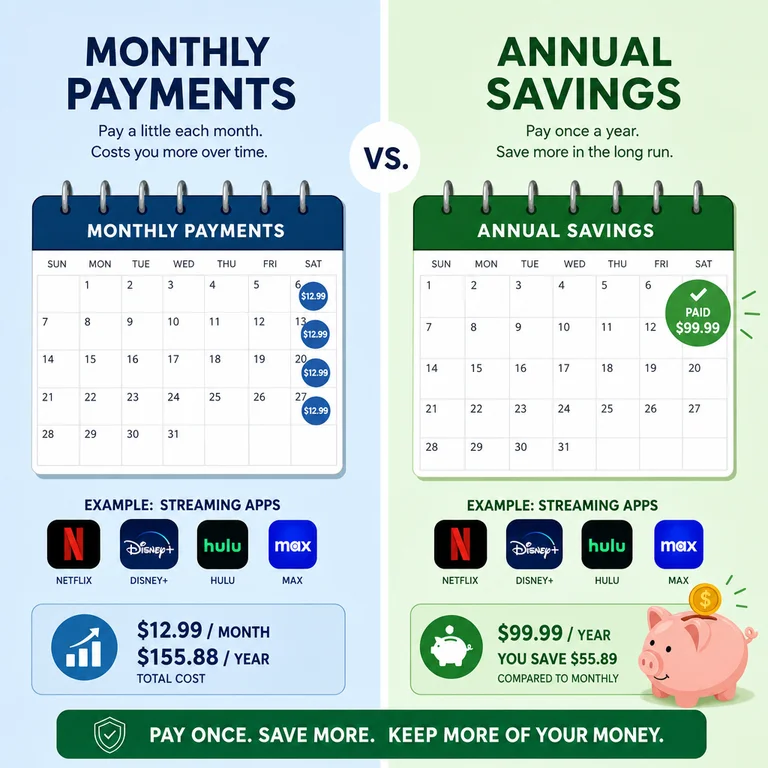
T-Mobile Go5G Plus gives you Netflix, Apple TV+, and Hulu free. Add the Chase Sapphire streaming credit covering Max at $16.99. Subscribe to the Paramount+ annual plan at $5 per month. Total out-of-pocket: roughly $5 monthly for six major services.
This example covers Netflix, Apple TV+, Hulu, Max, and Paramount+ while leaving room to add Peacock through an Xfinity internet perk or Amazon Prime through existing membership. Seven services for single-digit spending.