Best Lossless Audio Streaming Services Ranked
Ranked list of the best lossless audio streaming services including Apple Music, Tidal, Amazon Music, Qobuz, and Deezer for hi-res listening.
Anúncios
Lossless audio streaming delivers music exactly as the artist recorded it, without compression artifacts that strip away detail. Several major platforms now offer this feature, but the quality and pricing vary significantly.
What Is Lossless Audio and Why Does It Matter?
Anúncios
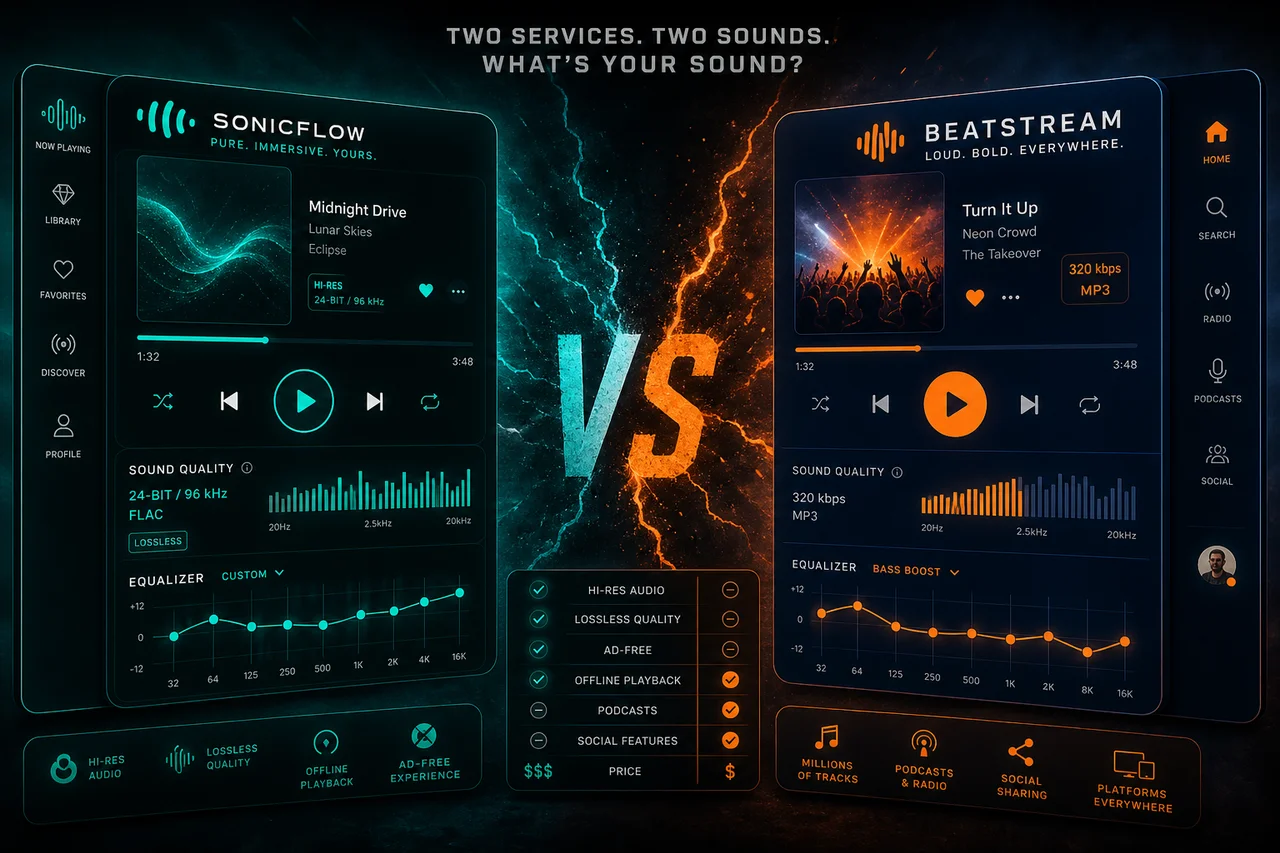
Lossless audio preserves every bit of the original recording file. Formats like FLAC and ALAC compress file sizes without discarding any audio data, unlike MP3 or AAC which permanently remove frequencies deemed less audible.
The difference becomes apparent on quality headphones or speakers. Instruments sound more separated, vocals carry more texture, and the overall soundstage feels wider compared to standard compressed streams at 128 or 256kbps.
Apple Music Lossless: Free Hi-Res for Everyone
Anúncios
Apple Music includes lossless audio at no extra cost across its entire catalog. Streams range from CD-quality 16-bit/44.1kHz up to hi-res 24-bit/192kHz, all bundled into the standard $10.99 monthly subscription.
The catch is hardware compatibility. AirPods and most Bluetooth headphones cannot receive lossless audio due to Bluetooth codec limitations. You need wired headphones or a compatible DAC to hear the full quality.
How Does Tidal HiFi Plus Compare?
Tidal offers lossless FLAC at CD quality on its HiFi tier and hi-res MQA tracks on HiFi Plus at $19.99 per month. MQA is a proprietary format that unfolds compressed hi-res files, though it has faced criticism from some audiophiles.
Tidal recently added FLAC hi-res alongside MQA, giving subscribers both options. The platform also features Dolby Atmos and Sony 360 Reality Audio tracks for immersive spatial listening experiences.
Amazon Music Unlimited and HD Audio
Amazon Music Unlimited includes HD and Ultra HD streaming at no additional charge. HD delivers CD-quality 16-bit/44.1kHz, while Ultra HD reaches 24-bit/192kHz across millions of songs in the catalog.
Amazon integrates natively with Echo devices and Fire TV, making it convenient for listeners embedded in the Amazon ecosystem. The desktop and mobile apps display audio quality badges showing exactly what resolution each track plays at.
Is Qobuz the Best Choice for Audiophiles?
Qobuz is built specifically for audiophile listeners. Every track streams in true hi-res FLAC without proprietary encoding. Plans start at $12.99 monthly for lossless CD quality and $14.99 for hi-res up to 24-bit/192kHz.
Qobuz also sells high-resolution downloads for permanent ownership. Its editorial content focuses on classical, jazz, and album-oriented listening, appealing to music enthusiasts who value depth over algorithmic playlists.
Deezer HiFi and FLAC Streaming
Deezer offers FLAC streaming at CD quality (16-bit/44.1kHz) through its HiFi tier at $14.99 per month. The catalog includes over 90 million tracks with lossless available on desktop, mobile, and compatible connected devices.
Deezer uses a unique Flow feature that creates a personalized radio station blending favorite tracks with new discoveries. The interface is clean and the lossless toggle makes switching between quality levels straightforward.
What Equipment Do You Need for Lossless Listening?
A proper lossless setup requires wired headphones or speakers connected through a digital-to-analog converter. Bluetooth cannot transmit lossless audio due to bandwidth limitations inherent in current wireless codecs.
Entry-level DACs from brands like FiiO, iFi, and Topping start around $50 and connect via USB to phones or computers. These small devices dramatically improve audio quality even with moderately priced wired headphones.
Can You Actually Hear the Difference?
Blind listening tests show mixed results. Trained ears with quality equipment can often distinguish lossless from compressed audio, especially in complex orchestral or acoustic recordings with wide dynamic range.
Casual listeners using standard earbuds may notice little difference between 256kbps AAC and lossless FLAC. The improvement becomes more apparent at higher volumes and with tracks that feature subtle instrumental detail.
How Much Data Does Lossless Streaming Use?
Lossless audio consumes roughly 3-4 times more data than standard quality streams. A CD-quality FLAC track uses about 36MB per hour compared to 10MB for a 256kbps compressed stream over the same duration.
Hi-res 24-bit/192kHz streams can burn through 150MB per hour or more. Downloading tracks over WiFi before listening on mobile helps avoid unexpected data charges on cellular connections.
Which Service Offers the Best Spatial Audio?
Apple Music leads with Dolby Atmos support across thousands of tracks, automatically playing spatial audio on compatible AirPods and Beats headphones. Tidal offers both Dolby Atmos and Sony 360 Reality Audio options.
Amazon Music supports Dolby Atmos on select tracks through compatible Echo Studio speakers and headphones. Spatial audio creates a three-dimensional soundscape that surrounds the listener with instruments placed in distinct positions.
Pricing Comparison for Lossless Tiers
- Apple Music: $10.99/month — lossless and hi-res included free
- Amazon Music Unlimited: $10.99/month — HD and Ultra HD included
- Tidal HiFi Plus: $19.99/month — FLAC, MQA, and spatial audio
- Qobuz Studio: $14.99/month — true hi-res FLAC, no proprietary codecs
- Deezer HiFi: $14.99/month — CD-quality FLAC streaming
Which Lossless Streaming Service Should You Pick?
Apple Music and Amazon Music offer the best value since lossless audio comes included at standard pricing. Qobuz appeals to purists who want true hi-res FLAC without MQA controversy. Tidal suits listeners who want everything in one package.
Your choice ultimately depends on existing hardware, ecosystem preferences, and how much you value editorial curation versus algorithmic recommendations. All five services deliver genuinely excellent lossless audio quality.