Best Music Streaming Platforms for Independent Artists
Best streaming platforms for independent artists. Compare payout rates, distribution, promotion tools, and how to grow an audience on each service.
Anúncios
Independent artists navigate a streaming landscape dominated by major labels with massive marketing budgets. Choosing the right platform and distribution strategy can mean the difference between obscurity and building a sustainable music career.
How Much Do Streaming Platforms Pay Independent Artists?
Anúncios
Per-stream rates vary wildly between platforms. Tidal pays roughly $0.01 per stream. Apple Music averages $0.007-0.01. Spotify pays $0.003-0.005. YouTube Music pays $0.002-0.004 depending on whether streams come from premium or ad-supported users.
These rates mean an independent artist needs roughly 250,000 Spotify streams to earn $1,000. On Apple Music, the same income requires about 130,000 streams. The math highlights why diversifying revenue streams beyond streaming matters.
Which Distribution Services Get Music on All Platforms?
Anúncios
DistroKid charges $22.99 yearly for unlimited uploads to all major platforms. TuneCore costs $9.99 per single and $29.99 per album annually. CD Baby takes a one-time fee of $9.95 per single with no annual renewals.
AWAL and UnitedMasters offer free distribution but take a percentage of royalties. Amuse provides a free tier with slower distribution and a premium tier with faster release processing and additional promotional tools.
What Is Spotify for Artists and Why Should You Use It?
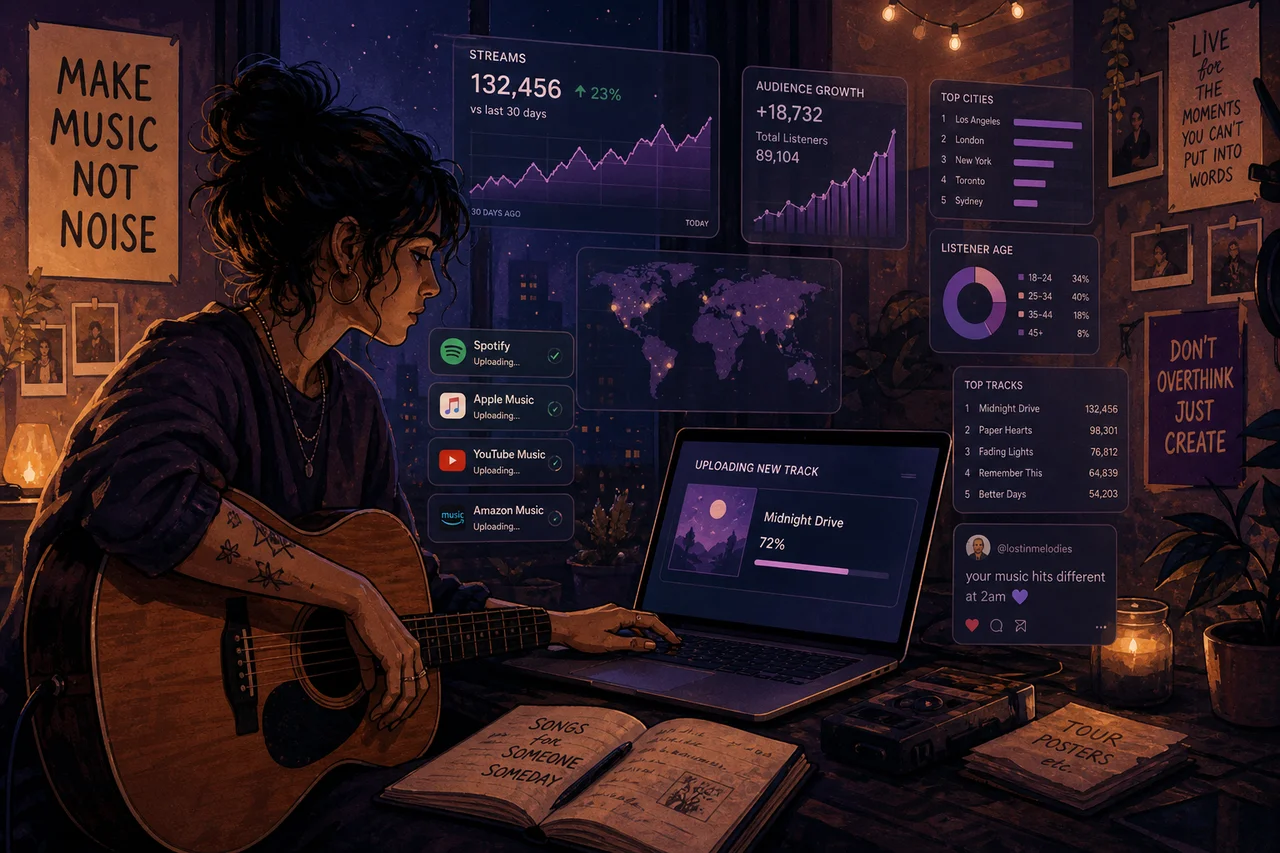
Spotify for Artists gives musicians access to listener demographics, streaming analytics, and playlist submission tools. Artists can pitch unreleased tracks to Spotify's editorial team for potential placement on curated playlists.
The platform shows real-time streaming data including listener location, age, gender, and how fans discovered your music. This intelligence helps independent artists target marketing efforts and plan tour routes effectively.
How Can Independent Artists Get on Spotify Playlists?
Submit unreleased music through Spotify for Artists at least seven days before release. Editorial playlists receive millions of submissions, so compelling artist profiles, professional artwork, and strong early streaming numbers improve placement odds.
Algorithmic playlists like Discover Weekly and Release Radar require organic engagement signals. High save rates, low skip rates, and playlist adds from real listeners trigger the algorithm to expand distribution to broader audiences.
Does Bandcamp Still Matter for Independent Musicians?
Bandcamp lets artists sell music directly to fans with an 82% revenue share after payment processing. Fans pay what they want above a minimum price, and many voluntarily pay more to support artists they love.
The platform works best alongside streaming rather than replacing it. Bandcamp serves dedicated fans willing to purchase while streaming platforms handle casual discovery. Together they create a complete independent music business.
What Role Does SoundCloud Play for Emerging Artists?
SoundCloud remains a launchpad for emerging artists with its open upload model requiring no distributor. The platform's community features including reposts, comments, and track embedding help new artists build initial audiences.
SoundCloud's fan-powered royalty system pays artists based on individual listener behavior rather than pooled streams. This model benefits niche artists with dedicated fans more than the traditional pro-rata system used by Spotify.
How Do You Build an Audience on Streaming Platforms?
- Release music consistently, aiming for singles every 4-6 weeks rather than annual albums
- Optimize artist profiles with professional photos, bios, and social links on every platform
- Pitch to independent playlist curators who feature emerging artists in your genre
- Promote pre-saves before release day to generate early streaming momentum
- Engage fans on social media and drive traffic to streaming profiles from TikTok and Instagram
- Collaborate with other independent artists to cross-pollinate fan bases
What Is Spotify Discovery Mode and Should Artists Use It?
Discovery Mode lets artists accept a lower royalty rate on specific tracks in exchange for increased algorithmic placement. Spotify boosts these tracks in radio and autoplay queues, trading revenue per stream for higher total exposure.
The feature is controversial. Critics argue it creates a pay-to-play dynamic favoring artists willing to sacrifice income. Supporters see it as an affordable promotional tool that smaller artists can use strategically for key releases.
How Do Apple Music and YouTube Music Support Independent Artists?
Apple Music for Artists provides analytics similar to Spotify for Artists with streaming data, listener demographics, and Shazam identification metrics. Apple's higher per-stream rate makes it financially important despite lower total user numbers.
YouTube Music benefits artists who create visual content since music videos drive streams. YouTube's Content ID system ensures artists receive royalties when their music appears in other creators' videos across the platform.
Should Independent Artists Focus on One Platform?
Distributing to all platforms costs little through modern distributors and maximizes potential audience reach. However, promotional efforts should concentrate on one or two platforms where your genre's audience is most active.
Hip-hop and pop artists often focus on Spotify and YouTube. Electronic artists thrive on SoundCloud and Bandcamp. Classical and jazz musicians find stronger communities on Apple Music and Qobuz where audio quality draws dedicated listeners.
What Revenue Streams Complement Streaming Income?
Live performances, merchandise, sync licensing for TV and film, and direct fan support through Patreon or Bandcamp generate more reliable income than streaming alone. Successful independents treat streaming as promotion rather than primary revenue.
Teaching music online, offering mixing services, and creating sample packs diversify income further. The most sustainable independent careers combine multiple revenue streams with streaming serving as the discovery engine.
How Is the Streaming Payment Model Evolving?
Deezer and SoundCloud have adopted user-centric payment models where your subscription money goes to artists you actually listen to. Spotify and others still use pro-rata pooling where all subscription revenue gets divided by total platform streams.
The shift toward user-centric payments benefits independent artists with loyal niche audiences. Instead of competing against mega-stars for pool shares, your dedicated fans' subscriptions flow directly to supporting your music.