Best Music Streaming Services for Workout Playlists
Best music streaming for workouts. Compare Spotify, Apple Music, and YouTube Music workout playlists, fitness features, and gym listening tools.
Anúncios
The right workout music can boost performance by up to 15% according to exercise science research. Streaming platforms compete fiercely to be your gym companion with curated playlists, tempo matching, and fitness app integrations.
Why Does Workout Music Actually Improve Performance?
Anúncios
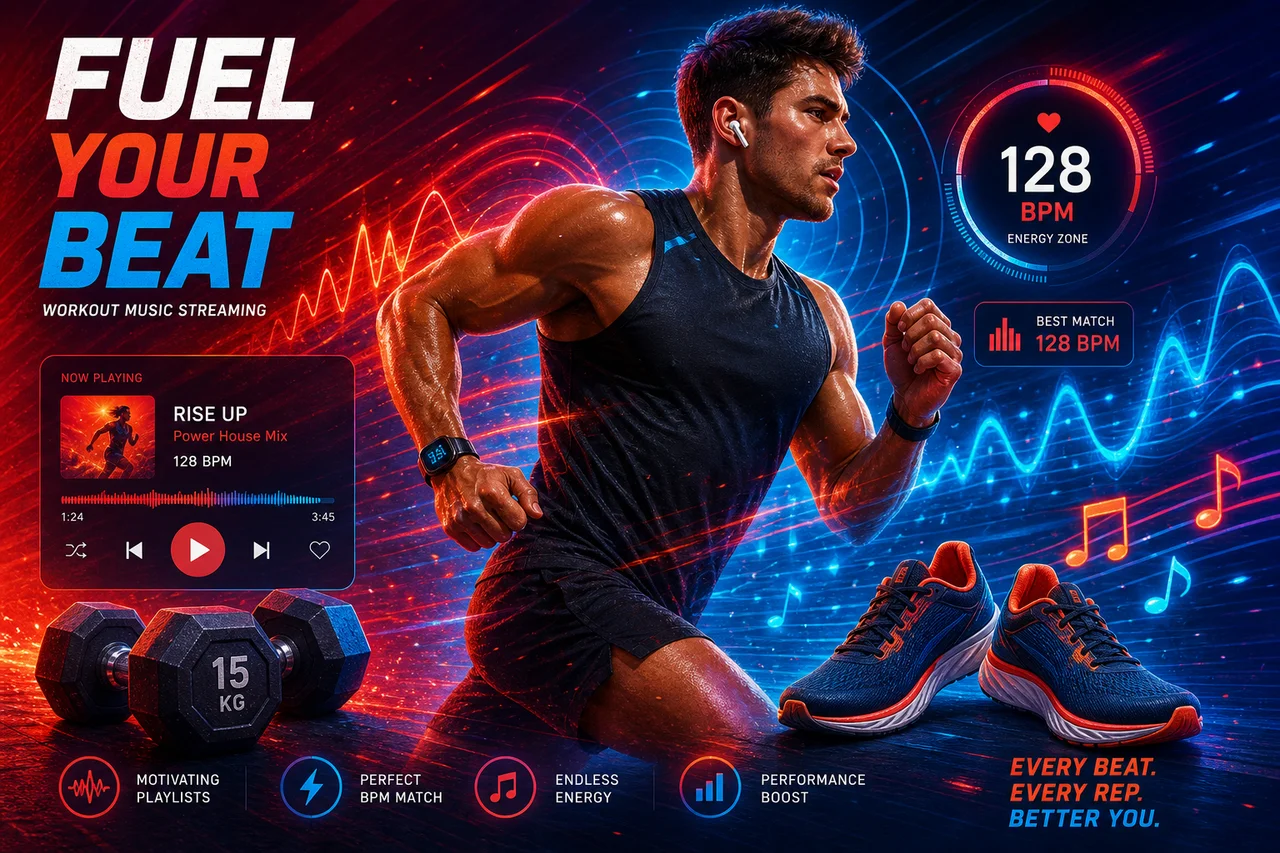
Music distracts from fatigue signals, synchronizes movement patterns with beat tempo, and triggers motivational emotional responses. Upbeat tracks between 120-140 BPM match most cardio exercise rhythms naturally.
Studies show that self-selected music improves endurance by reducing perceived effort during high-intensity training. Listening to familiar favorite tracks creates an additional psychological boost through positive association.
How Good Are Spotify Workout Playlists?
Anúncios
Spotify offers hundreds of curated workout playlists sorted by activity type, intensity level, and genre preference. Categories include running, weightlifting, HIIT, yoga, and cycling with playlists updated weekly by editorial teams.
The Spotify Running feature previously matched music tempo to your cadence, though this standalone feature was retired. Current workout playlists are manually curated by BPM range to match common exercise intensities.
Does Apple Music Integrate With Apple Watch for Workouts?
Apple Music streams directly to Apple Watch over WiFi or cellular without needing your iPhone nearby. Downloaded playlists play through Bluetooth headphones during runs, gym sessions, and outdoor activities independently.
Apple Fitness+ workouts sync background music from Apple Music with instructor-led sessions. The tight ecosystem integration makes Apple Music the natural choice for Apple Watch owners who exercise with wearable devices.
Which Platform Has the Best Running Mode?
Nike Run Club integrates with Spotify and Apple Music, syncing guided runs with background music. Spotify previously offered native running tempo detection, and similar functionality now lives in third-party fitness apps.
Apps like RockMyRun and Weav Music dynamically adjust song tempo to match your running pace in real time. These specialized tools fill the gap left by mainstream streaming platforms that retired native running features.
What BPM Range Works Best for Different Exercises?
- Yoga and stretching: 60-90 BPM for calm, flowing movements
- Walking: 100-120 BPM matching natural walking cadence
- Jogging: 120-140 BPM for moderate cardio intensity
- Running: 140-170 BPM for faster training paces
- HIIT and sprints: 150-180 BPM for maximum intensity intervals
- Weightlifting: 130-150 BPM for steady lifting rhythm
How Do Fitness Apps Integrate With Music Streaming?
Peloton connects with Apple Music and Spotify for background music during bike, tread, and strength classes. The app syncs instructor-selected playlists that play through your streaming subscription during live and on-demand workouts.
Strava, Nike Training Club, and Fitbit all support Spotify integration for workout tracking with music. These connections let you control playback from within the fitness app without switching between separate applications.
Are There Playlists Specifically Designed for Gym Use?
Spotify curates genre-specific gym playlists like "Beast Mode" for hip-hop lifting, "Power Workout" for electronic training, and "Motivation Mix" blending pop and dance tracks. These collections target common gym listening preferences.
Apple Music features workout collections organized by Apple Fitness+ trainers. YouTube Music offers community-created gym playlists alongside official workout mixes that draw from the platform's vast music video catalog.
Should You Use Wired or Wireless Headphones at the Gym?
Wireless earbuds dominate gym use for freedom of movement. True wireless options from Apple, Samsung, Sony, and Jabra offer sweat resistance, secure fit, and solid battery life for sessions lasting over an hour.
Bone conduction headphones from Shokz let runners hear traffic while enjoying music. Over-ear wireless headphones work for weightlifting but may shift during dynamic movements like burpees or box jumps.
Can Music Streaming Replace a Personal Trainer's Motivation?
Music provides external motivation but lacks the personalized feedback and form correction a trainer offers. Guided workout playlists on Spotify and Apple Music combine music with spoken coaching cues for a middle-ground approach.
Spotify has experimented with workout audio content where trainers narrate exercises over background music. This format bridges entertainment and instruction, though it cannot replace hands-on coaching for technique-sensitive exercises.
How to Build Your Own Workout Playlist
Start with your warmup track at a moderate tempo, then escalate BPM through the main workout. Include a few peak-energy songs for the hardest segments and wind down with slower tracks for cooldown stretching.
Keep workout playlists between 45-75 minutes matching typical session lengths. Use Spotify Enhance to fill gaps with AI-suggested tracks that match your existing playlist's energy and tempo profile.
What Makes a Great Workout Song?
Strong rhythmic beats, driving bass lines, and motivational lyrics create effective workout tracks. Songs with distinct drops and build-ups match interval training patterns where intensity alternates between high and rest periods.
Personal connection to songs matters more than objective quality. A track that reminds you of a personal achievement or pumps you up emotionally will outperform a technically perfect workout song that leaves you indifferent.
Which Streaming Service Is Best for Gym Music?
Spotify leads with the widest selection of curated workout playlists and broadest fitness app integration. Apple Music excels for Apple Watch users and Fitness+ subscribers. YouTube Music offers great variety but fewer workout-specific features.
For serious athletes who want tempo-matched music, specialized apps like RockMyRun paired with a Spotify subscription create the most advanced workout audio experience available across platforms.