Free vs Premium Music Streaming Plans Worth Knowing
Free vs premium music streaming compared. Discover what ads, limits, and missing features come with free tiers on Spotify, YouTube Music, and more.
Anúncios
Free music streaming tiers give access to massive catalogs without spending a dollar. Premium plans remove ads and unlock extra features, but the upgrade cost adds up. Understanding exactly what each tier offers helps you decide.
What Do You Get With Spotify Free?
Anúncios
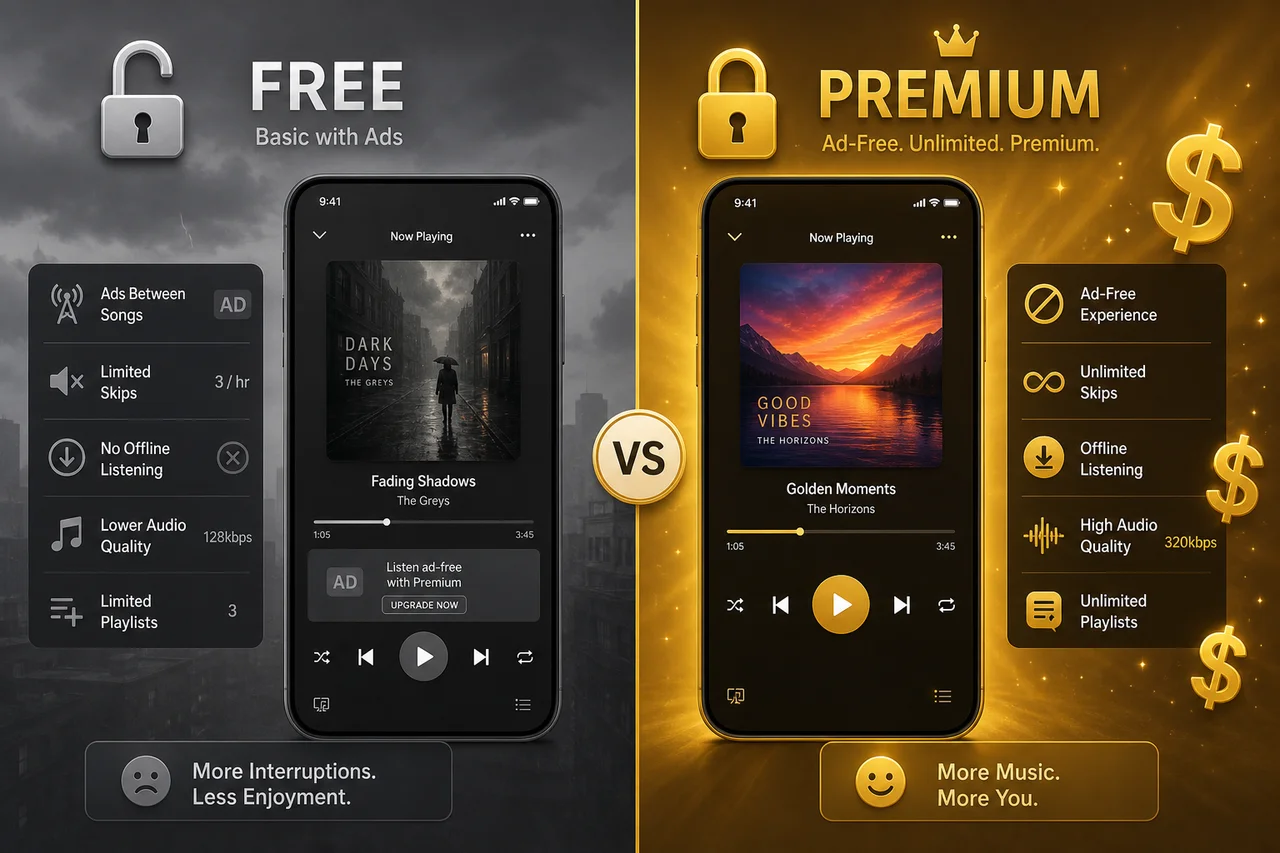
Spotify Free provides access to the entire 100-million-track catalog with shuffle play on mobile. Desktop users can play any song on demand. Audio quality caps at 160kbps, and ads play between every few songs.
Free users cannot download music for offline playback or skip unlimited tracks on mobile. The experience works well for background listening but feels restrictive for anyone who wants precise control over their queue.
How Does YouTube Music Free Compare?
Anúncios
YouTube Music Free grants access to the full music catalog with ads. The major limitation is no background playback on mobile, meaning the app stops playing when you switch to another app or lock your screen.
This restriction makes YouTube Music Free impractical for phone-based listening during walks, commutes, or workouts. Desktop and web browsers play continuously regardless of tier, making free use more viable on computers.
Which Free Streaming Tier Is Best Overall?
Spotify Free offers the most usable free experience with background playback on mobile, full catalog access, and algorithmic playlists. The shuffle restriction on mobile is annoying but manageable for casual listeners.
YouTube Music Free wins on desktop where background playback works and video content adds extra value. Amazon Music Free provides a limited selection of ad-supported stations rather than full on-demand catalog access.
What Features Unlock With Premium Subscriptions?
- Ad-free listening: No interruptions between songs or mid-track ads
- Offline downloads: Save music for playback without internet
- On-demand playback: Play any song instantly without shuffle restrictions
- Higher audio quality: Stream at 320kbps or lossless depending on service
- Unlimited skips: Skip as many tracks as you want without limits
- Background playback: Music continues when you switch apps (YouTube Music)
How Annoying Are Ads on Free Music Tiers?
Spotify inserts audio ads roughly every 15-30 minutes, each lasting 15-30 seconds. Banner and video ads appear in the app interface. The frequency increases during peak listening hours and popular content.
YouTube Music shows video ads before songs and display ads in the interface. The ad density feels heavier than Spotify, especially on popular tracks. Both services keep ads non-intrusive compared to terrestrial radio.
Does Audio Quality Really Differ Between Tiers?
Spotify Free streams at 160kbps versus 320kbps on Premium. The difference is subtle on standard earbuds but noticeable on quality headphones, especially in complex music with layered instruments and wide dynamics.
Apple Music and Tidal have no free tier, so all subscribers receive the same high-quality audio. YouTube Music Free streams at lower bitrates than Premium, though the exact difference varies by region and device.
Is Premium Worth It for Casual Listeners?
Casual listeners who stream background music a few hours weekly may find free tiers perfectly adequate. The ads are infrequent enough that occasional listeners barely notice them during light use sessions.
Premium becomes worthwhile when you listen daily, commute with music, or want offline playback for travel. The breakpoint is typically 10-15 hours of weekly listening where ad interruptions become genuinely frustrating.
What About Free Trials Before Committing?
Spotify offers one-month free Premium trials for new users. Apple Music provides one month free. YouTube Music gives a one-month trial. These trials provide full premium features to evaluate whether the upgrade justifies ongoing cost.
Extended trial offers of three to six months occasionally appear through carrier partnerships, device bundles, and holiday promotions. Checking before subscribing can save significant money in the first year.
Can You Switch Between Free and Premium Easily?
Downgrading from Premium to Free preserves your account, playlists, and listening history. Downloaded music becomes unplayable offline, and audio quality drops to the free tier maximum automatically.
Upgrading back to Premium restores all features instantly. Previously downloaded tracks may need re-downloading, but your library and preferences remain untouched throughout any tier changes.
Are There Hidden Costs With Premium Plans?
Standard Premium plans have no hidden fees beyond the monthly subscription. Annual plans sometimes offer discounts equivalent to one or two free months. Price increases happen occasionally with advance notice.
Data usage is the hidden cost for mobile streamers without unlimited plans. Streaming at high quality over cellular can consume several gigabytes monthly, adding indirect cost through carrier data charges.
How Do Free Tiers Compare for Podcast Listening?
Podcasts on Spotify are fully available on the free tier without audio quality restrictions. Apple Podcasts is a separate free app. YouTube Music free tier includes podcasts but with the same background playback limitation.
For podcast-only listeners, free tiers work excellently since most restrictions target music playback specifically. The combination of free music streaming and free podcast access makes Spotify Free particularly attractive.
Should You Pay for Music Streaming or Stay Free?
Pay if you listen more than an hour daily, need offline downloads, or find ads disruptive. Stay free if you listen casually, primarily use desktop, or combine free streaming with other music sources like vinyl or radio.
The $10.99 monthly premium price equals roughly two coffee purchases. For daily listeners, the value per hour of entertainment is remarkably low compared to almost any other form of paid media consumption.