Playlist Curation Tips to Build Perfect Music Mixes
Learn playlist curation tips for Spotify, Apple Music, and more. Build better playlists with mood matching, pacing, and smart track ordering.
Anúncios
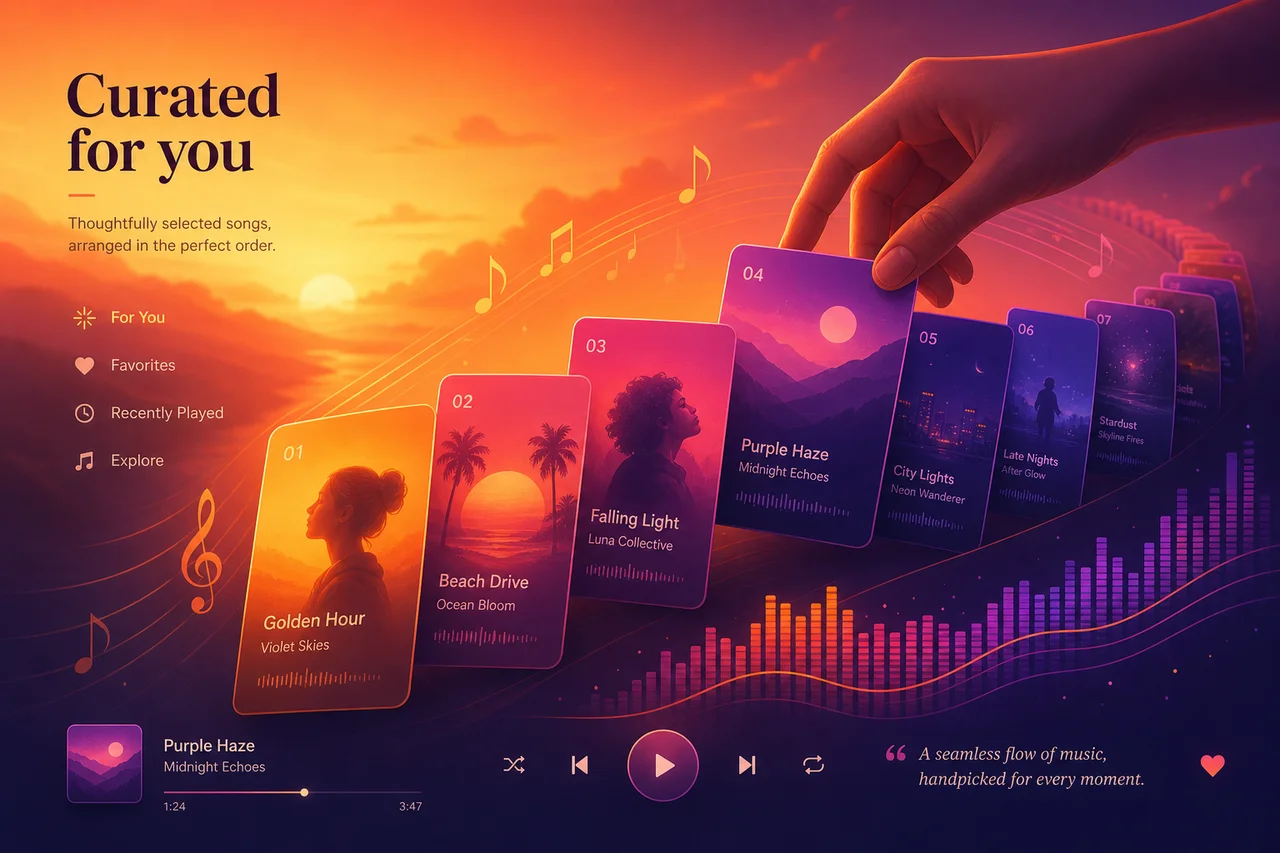
A great playlist tells a story through music. The best curators think about flow, energy arcs, and emotional progression rather than just dumping favorite songs into a random list.
What Makes a Playlist Feel Cohesive?
Anúncios
Cohesion comes from consistent mood, complementary tempos, and compatible sonic textures. A playlist mixing death metal with acoustic folk will jolt listeners unless the transitions are carefully crafted.
Think about the thread connecting your tracks. It could be a shared mood, similar instrumentation, the same era, or a narrative arc that takes listeners on a journey from calm to energized.
How to Start Building a Playlist from Scratch
Anúncios
Begin with a clear purpose. Are you building a workout mix, a dinner party backdrop, a road trip companion, or a late-night wind-down session? Defining the intent shapes every track selection.
Pick three to five anchor tracks that define the playlist's core vibe. Build outward from these anchors, adding songs that complement them in tempo, key, and energy while introducing enough variety to avoid monotony.
The Art of Track Ordering and Flow
Open with a strong hook track that immediately signals the playlist's mood. Avoid starting with a slow build unless the entire collection is meant for relaxation or ambient listening experiences.
Create energy waves throughout the playlist. Let intensity rise and fall naturally rather than maintaining one flat level. Three or four peaks with valleys between them keeps listeners engaged longer.
Should You Mix Genres Within One Playlist?
Genre mixing works when tracks share emotional DNA. An indie folk song and a downtempo electronic track can sit together beautifully if both carry a melancholic evening atmosphere.
The key is smooth transitions between genres. Place bridge tracks that share elements with both neighboring songs. A lo-fi hip-hop beat can link a jazz track to an R&B ballad naturally.
How Many Songs Should a Good Playlist Have?
Most engaging playlists run 25 to 50 tracks, hitting a sweet spot of 90 minutes to three hours. Shorter playlists feel thin on repeat. Longer ones lose cohesion and become background noise.
Workout playlists may need only 15-20 high-energy tracks matching a session length. Study playlists benefit from longer collections exceeding 100 tracks to avoid repetition during extended focus periods.
Using Key and BPM for Smooth Transitions
Songs in the same musical key or neighboring keys on the Camelot wheel blend seamlessly. Tools like Tunebat display the BPM and key of any song, helping you sequence tracks that flow without jarring shifts.
Gradually increasing or decreasing BPM across a playlist creates a natural energy arc. Jumping from 80 BPM to 160 BPM feels abrupt, but stepping through 80, 95, 110, 125, and 145 feels organic.
What Tools Help with Playlist Curation?
- Spotify Enhance: AI suggests tracks that fit your existing playlist vibe
- Chosic: Finds similar songs based on audio features and mood
- Tunebat: Shows BPM and key for any song to plan transitions
- Organize Your Music: Sorts Spotify libraries by energy, danceability, and mood
- Soundiiz: Syncs playlists across platforms to maintain collections everywhere
How Often Should You Update Your Playlists?
Active playlists benefit from monthly refreshes. Remove tracks that no longer fit, add recent discoveries, and keep the collection feeling alive. Stale playlists lose followers on public streaming profiles.
Some curators maintain evergreen playlists that rarely change alongside seasonal collections updated weekly. This dual approach serves listeners who want both reliable favorites and fresh recommendations.
Tips for Building Playlists That Others Want to Follow
Give your playlist a descriptive, searchable name. "Late Night Drive Through Empty Streets" attracts more followers than "My Playlist #47." The title should immediately communicate the mood and purpose.
Write a playlist description that explains the vibe in two sentences. Add relevant keywords naturally. Choose cover art that visually represents the sonic atmosphere to increase click-through rates.
Can Collaborative Playlists Improve Your Curation?
Collaborative playlists on Spotify let multiple users contribute tracks. This crowd-sourced approach introduces songs you might never find alone, expanding your musical horizons through friends' diverse tastes.
Set ground rules for collaborative playlists to maintain cohesion. A shared theme or mood guideline prevents the list from becoming a chaotic dump of unrelated tracks from different contributors.
Common Playlist Mistakes to Avoid
Avoid front-loading all your best tracks. Distribute highlights throughout the playlist to reward listeners who stay beyond the first few songs. Burying gems deeper keeps engagement high.
Resist adding every song you enjoy. Curation means leaving good tracks out when they break the flow. A focused 30-song playlist beats a bloated 200-song collection with no direction.
How Playlist Curation Differs Across Platforms
Spotify offers the most playlist tools including Enhance AI, collaborative features, and Blend. Apple Music provides beautiful formatting but fewer curation aids. YouTube Music allows mixing audio tracks with video content.
Each platform's algorithm treats playlists differently for discoverability. Spotify rewards playlists with high save rates and consistent listening. Optimizing for these signals helps your playlists reach wider audiences.