Spatial Audio and Dolby Atmos Music Streaming Guide
Spatial audio and Dolby Atmos music guide. Which streaming services support 3D audio, compatible devices, and how immersive sound works.
Anúncios
Spatial audio places instruments and vocals in a three-dimensional soundscape around your head. Dolby Atmos and Sony 360 Reality Audio are the leading formats transforming how streaming platforms deliver immersive music experiences.
What Exactly Is Spatial Audio for Music?
Anúncios
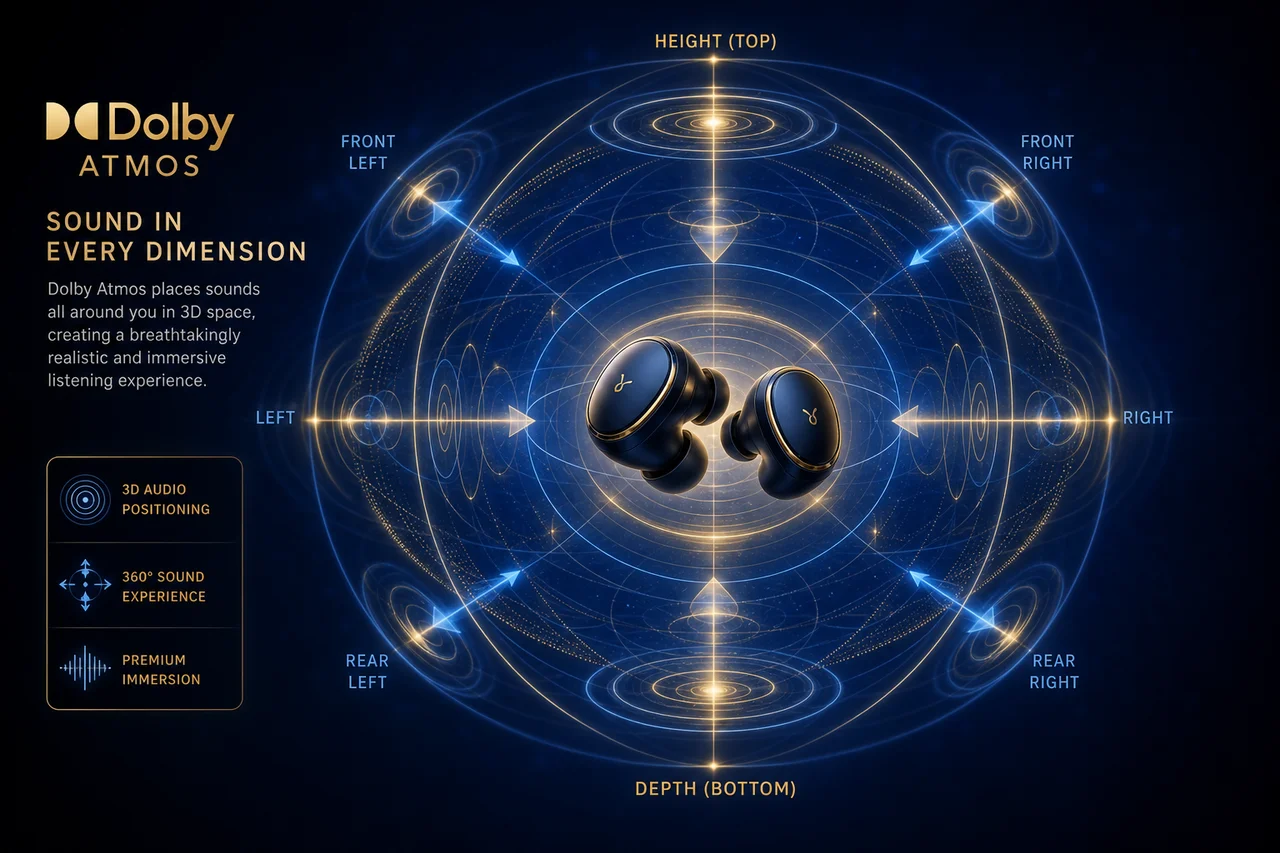
Spatial audio uses object-based mixing to position individual sound elements in 3D space. Instead of traditional left-right stereo channels, instruments and voices exist as separate objects placed at specific locations around the listener.
The result feels like standing inside the recording studio. Drums might sit behind you, vocals center above, guitars flank the sides, and keyboards drift across the space as the mix engineer intended.
How Does Dolby Atmos Differ From Regular Stereo?
Anúncios
Stereo sends audio to two channels creating a flat left-right sound field. Dolby Atmos supports up to 128 audio tracks and 7.1.4 speaker configurations, creating height, depth, and width dimensions that stereo cannot reproduce.
On headphones, Atmos uses binaural rendering to simulate this 3D effect using just two drivers. Head tracking on compatible earbuds adjusts the soundstage as you move, anchoring instruments in fixed positions relative to your device.
Which Streaming Services Support Dolby Atmos?
Apple Music leads with the largest Dolby Atmos catalog, automatically playing spatial versions when available on compatible devices. Tidal offers Atmos tracks alongside Sony 360 Reality Audio on its HiFi Plus tier.
Amazon Music supports Dolby Atmos through Echo Studio speakers and select headphones. Spotify has not yet launched spatial audio support despite years of rumored development and competitor pressure.
What Is Sony 360 Reality Audio?
Sony 360 Reality Audio uses MPEG-H 3D Audio codec to create immersive soundscapes. The format analyzes your ear shape through the Sony Headphones app to customize the spatial rendering for your specific anatomy.
Tidal, Amazon Music, and Deezer support 360 Reality Audio on compatible Sony headphones and speakers. The personalized ear mapping creates a notably more accurate spatial experience compared to generic binaural rendering.
What Devices Support Spatial Audio Playback?
- AirPods Pro and AirPods Max: Head-tracked Dolby Atmos via Apple Music
- Beats Fit Pro and Studio Pro: Spatial audio with Apple device integration
- Sony WH-1000XM5: 360 Reality Audio with personalized ear mapping
- Amazon Echo Studio: Dolby Atmos playback through speaker array
- Apple HomePod: Native Atmos rendering with room calibration
- Sonos Era 300: Dedicated spatial audio speaker with Atmos support
- Any headphones: Basic binaural spatial rendering without head tracking
Does Head Tracking Make a Big Difference?
Head tracking anchors the sound field relative to your device rather than your head. Turn your head left and the audio shifts as if the speakers stayed fixed in space. This creates a more convincing spatial illusion.
Without head tracking, the soundstage moves with your head, which still sounds spacious but lacks the fixed-point realism. Many listeners find head tracking enhances movies more than music where a centered stage feels natural.
How Many Songs Are Available in Spatial Audio?
Apple Music offers over 10,000 tracks in Dolby Atmos with new additions weekly. Tidal and Amazon Music carry smaller but growing spatial catalogs. Coverage skews toward pop, hip-hop, and electronic genres where spatial mixing enhances the experience.
Classical and jazz recordings benefit enormously from spatial audio due to their natural acoustic space. More orchestral and live concert recordings are receiving Atmos remixes as the format gains popularity among producers.
Is Spatial Audio Better Than Lossless Stereo?
Spatial audio and lossless serve different purposes. Lossless preserves maximum fidelity in traditional stereo. Spatial audio creates immersion through 3D positioning but typically uses lossy compression for the spatial data layer.
Audiophiles often prefer high-quality stereo for critical listening. Spatial audio shines for casual immersive experiences and music genres that benefit from three-dimensional separation like electronic, hip-hop, and orchestral recordings.
How Are Artists Creating Spatial Audio Mixes?
Producers use Dolby Atmos Music tools in DAWs like Logic Pro, Pro Tools, and Ableton Live to create immersive mixes. Apple provides free Atmos plugins and production guides to encourage widespread adoption by music creators.
Some artists remix existing catalogs for spatial audio while others create native Atmos recordings from the ground up. The creative possibilities attract producers who see spatial mixing as a new artistic dimension.
Will Spatial Audio Become the Standard for Music?
Spatial audio adoption is growing but stereo will remain the baseline for years. Not all music benefits from 3D positioning, and the production cost of creating quality Atmos mixes limits how quickly catalogs expand.
As more consumers own spatial-capable earbuds and speakers, demand will push labels and artists to invest in immersive mixing. The format will coexist with stereo rather than replacing it entirely.
How to Enable Spatial Audio on Your Device
On iPhone, go to Settings, then Music, and enable Dolby Atmos to Always On or Automatic. Apple Music will play spatial versions when available and fall back to stereo otherwise. AirPods enable head tracking through Control Center.
On Tidal, select the HiFi Plus tier and enable Dolby Atmos in audio settings. Amazon Music automatically plays Atmos tracks on compatible Echo devices. Each platform handles spatial audio activation slightly differently.