Spotify vs Apple Music vs YouTube Music Compared 2025
Compare Spotify, Apple Music, and YouTube Music side by side. Find which streaming service fits your budget, audio taste, and listening habits.
Anúncios
Choosing between Spotify, Apple Music, and YouTube Music comes down to how you listen, what devices you own, and what matters most in a streaming experience. Each platform brings unique strengths to the table.
How Do Spotify, Apple Music, and YouTube Music Compare on Price?
Anúncios
All three services charge roughly $10.99 per month for individual plans. Spotify and YouTube Music offer free ad-supported tiers, while Apple Music requires a subscription. Family and student pricing varies slightly across platforms.
YouTube Music Premium bundles with YouTube Premium at $13.99 monthly, removing ads from both video and music. Apple Music costs $10.99 for individuals and $16.99 for families with up to six members sharing one plan.
Music Library Size and Catalog Differences
Anúncios
Spotify, Apple Music, and YouTube Music each boast catalogs exceeding 100 million tracks. The real differences appear in exclusive releases, regional availability, and how quickly new albums land on each platform.
YouTube Music stands out by including user-uploaded content, live performances, remixes, and concert recordings that other platforms simply do not carry. This makes it unbeatable for niche and rare audio content.
Which Service Has the Best Sound Quality?
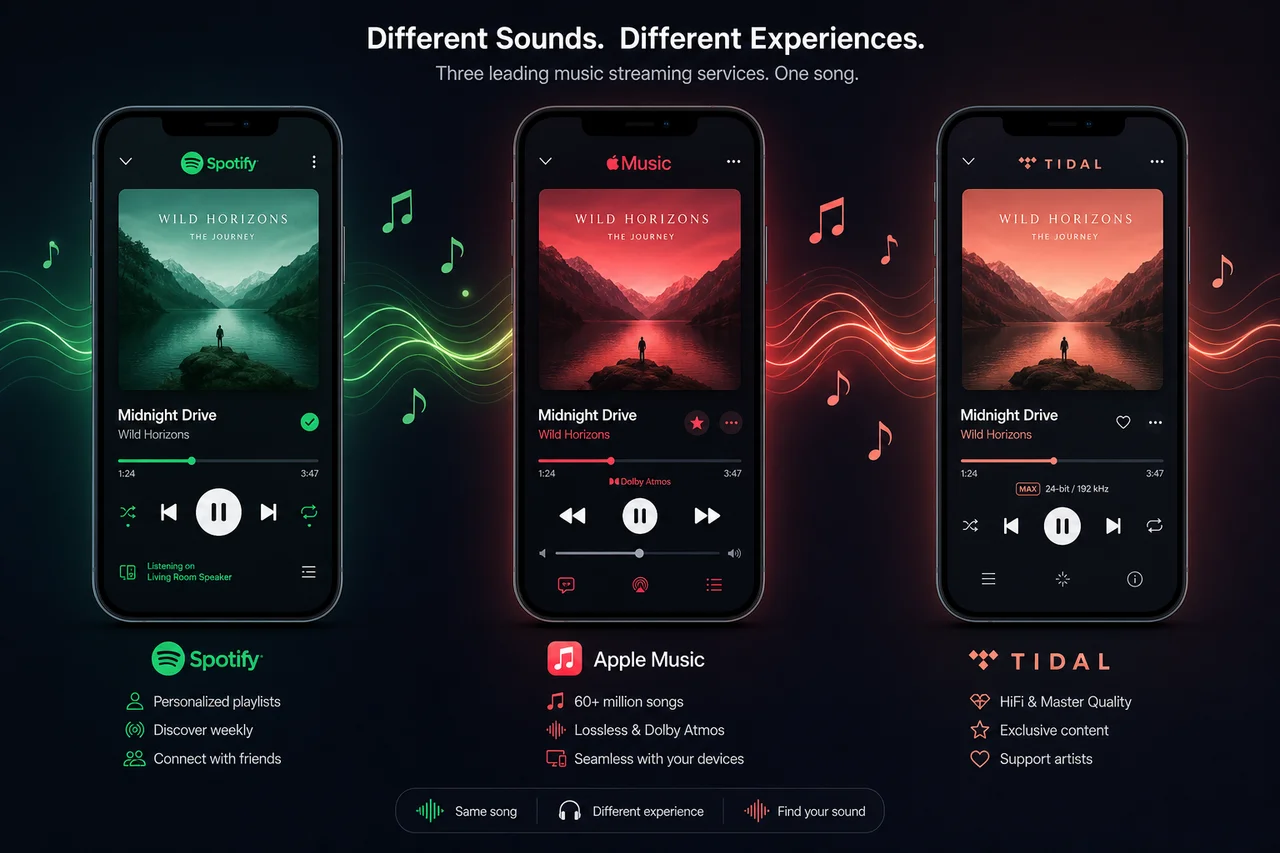
Apple Music streams lossless audio up to 24-bit/192kHz at no extra cost. Spotify caps at 320kbps OGG Vorbis on premium plans. YouTube Music reaches 256kbps AAC, though higher quality options have started rolling out.
Audiophiles often lean toward Apple Music or Tidal for lossless listening. Spotify announced HiFi years ago but has yet to deliver a lossless tier, frustrating many users waiting for that upgrade.
How Does Music Discovery Differ Across Platforms?
Spotify leads in algorithmic discovery with Discover Weekly, Release Radar, and Daily Mix playlists. These personalized recommendations analyze listening habits and surface tracks that match your taste profile precisely.
Apple Music relies more on human-curated playlists and editorial picks, which can feel more intentional. YouTube Music blends watch history with listening data, offering a unique hybrid recommendation engine.
Playlist Features and Social Sharing
Spotify dominates social features with collaborative playlists, Blend mixes with friends, and public profile sharing. Apple Music added collaborative playlists recently but still trails behind in community engagement tools.
YouTube Music lets users share playlists as regular YouTube links, making sharing seamless across social media. The integration with the broader YouTube ecosystem gives it natural viral potential.
What About Podcast and Video Content?
Spotify has invested billions in podcasts, making it a combined music-and-podcast hub. Apple Music focuses purely on music but pairs with Apple Podcasts as a separate app for spoken-word content.
YouTube Music uniquely includes music videos alongside audio tracks. You can switch between audio-only and video modes, which no other major music streaming service currently offers in the same app.
How Well Do These Services Work Across Devices?
Spotify works on nearly every device imaginable, from smart speakers to gaming consoles to car infotainment systems. Apple Music integrates deeply with iPhones, HomePods, and Apple Watch but also runs on Android.
YouTube Music runs on Android, iOS, and the web. Its integration with Google Nest speakers and Chromecast devices makes it the default choice for households already in the Google ecosystem.
Offline Listening and Download Limits
All three platforms allow offline downloads on premium plans. Spotify caps downloads at 10,000 songs per device across five devices. Apple Music allows up to 100,000 songs in your library with generous download limits.
YouTube Music permits downloads for offline playback with a Premium subscription. The download quality options vary, and smart downloads can automatically save recommended tracks for offline listening.
Which Platform Offers the Best Free Tier?
Spotify Free gives access to the full catalog with shuffle-play restrictions and ads between songs. YouTube Music Free also provides the entire library but limits background playback on mobile devices.
Apple Music has no permanent free tier, only a trial period. For listeners who want to stream without paying, Spotify and YouTube Music are the only viable options among these three services.
User Interface and Navigation Compared
Spotify keeps its interface clean with a sidebar navigation on desktop and bottom tabs on mobile. Apple Music mirrors iOS design patterns with bold typography and an emphasis on album art and editorial content.
YouTube Music feels familiar to anyone who uses YouTube. The interface blends music and video browsing, though some users find it cluttered compared to dedicated music apps from competitors.
Lyrics and Sing-Along Features
All three platforms now offer real-time synced lyrics. Spotify partnered with Musixmatch for scrolling lyrics, Apple Music displays time-synced lyrics natively, and YouTube Music shows lyrics sourced from multiple providers.
Do Artist Payouts Differ Between Services?
Apple Music pays artists roughly $0.01 per stream, while Spotify averages $0.003 to $0.005. YouTube Music payouts depend on ad revenue and subscription splits, generally falling below Apple Music rates.
Supporting your favorite artists financially means choosing platforms that pay fairly. Apple Music and Tidal currently lead in per-stream payouts compared to Spotify and YouTube Music.
Which Service Should You Choose?
Pick Spotify for the best discovery algorithm and social features. Choose Apple Music for lossless audio quality and tight Apple device integration. Go with YouTube Music for video content and Google ecosystem compatibility.
Each service excels in different areas, and the right choice depends entirely on your priorities. Trying the free tiers or trial periods before committing to an annual plan saves money and avoids regret.
- Best for discovery: Spotify with Discover Weekly and Daily Mix
- Best audio quality: Apple Music with lossless up to 192kHz
- Best free tier: Spotify or YouTube Music
- Best for video: YouTube Music with integrated music videos
- Best for Apple users: Apple Music with seamless device sync